Martian Illusion: Scientists Explain the Origin of the «Forest» on the Red Planet
A NASA orbiter captured structures in northern Mars resembling dense trees, but the phenomenon is actually driven by unique geological processes.
 👥Society
Photo: UNIAN
Key points
- NASA spacecraft photographed tree-like structures on Mars.
- The phenomenon is an optical illusion caused by dry ice sublimation and sand movement.
- Trapped gas under pressure bursts through, creating dark streaks on slopes.
- The cycle repeats annually with changing Martian seasons.
Modern space exploration sometimes reveals unexpected visual effects that can easily mislead even experts. Recently, researchers revisited an image of Mars' north pole captured by NASA’s Mars Reconnaissance Orbiter back in 2008. The photos display dark structures resembling trunks and branches of trees supposedly growing among icy dunes. However, scientists emphasize that there is no vegetation on the Red Planet, and the mysterious «forest» is merely an optical illusion.
Natural Mechanisms of Martian Spring
According to researchers, such visual effects stem from seasonal changes on the planet, which has an axial tilt similar to Earth's. Nevertheless, climatic processes occur differently due to a cold atmosphere where carbon dioxide freezes during winter, forming a thick layer of dry ice in polar regions. When spring arrives, this ice cover sublimates—turning directly from a solid into gas and returning to the atmosphere without melting into liquid.
This process is accompanied by active surface transformations. Sunlight penetrates the semi-transparent ice, warming the surface underneath and building up gas pressure beneath the ice sheet. Once the pressure reaches a critical point, gas bursts through, carrying dark sand along with it. The material avalanches down steep slopes, leaving long dark streaks that, when viewed from above, resemble branching trees.
Landscape Dynamics and Constant Renewal
Such seasonal eruptions significantly transform the Martian landscape year after year. Observations show that the lower edges of sand dunes can shift by several meters within a single Martian year due to these avalanches. Eventually, winds redistribute the sand, smoothing out the slopes, and with the return of winter, the surface freezes over again, preparing for the natural cycle to repeat.
For the residents of Boryslav and the wider community, such astronomical news serves as a reminder of the universe's complexity and the importance of a scientific approach. In an era when the information space is filled with unverified claims and sensational headlines, the ability to distinguish optical illusions from real facts fosters critical thinking. It helps people better understand natural phenomena both on Earth and beyond.
Source UNIAN — unian.ua/science/lis-na-marsi-chomu-na-poverhni-planeti-vidno-figur… ↗
Read next
 🚨Events
Tragedy in Romanian Mountains: Ukrainian Citizen Dies, Two Others Rescued
A Ukrainian citizen has died after getting lost in the Maramureș mountains in Romania. Two other individuals were located alive following a joint search and rescue operat…
 🛡️Security
Poland Demands NATO Strengthen Air Defense After Russian Missile Incursions
The Polish Ministry of Defense insists on reinforcing air defense across the Alliance's eastern flank following airspace violations by Russian missiles, while opting not …
 🚨Events
New Energy Attack: Naftogaz Facilities Targeted in Dnipropetrovsk and Zaporizhzhia Regions
Russian forces launched a targeted strike on critical infrastructure, hitting a gas facility with a guided bomb in the Dnipropetrovsk region and filling stations in Zapor…
 🏙️City
Military Specialists May Be Involved in Repairing Damaged Energy Facilities
The Ukrainian government is considering deploying military engineers and electricians to help civil utility workers accelerate energy repairs.
 🇺🇦Ukraine
British political forces distance themselves from Donald Trump over his stance on Russia
Leading British parties, including Reform UK and the Conservatives, have openly criticized Donald Trump for publicly calling Vladimir Putin his friend.
 🏙️City
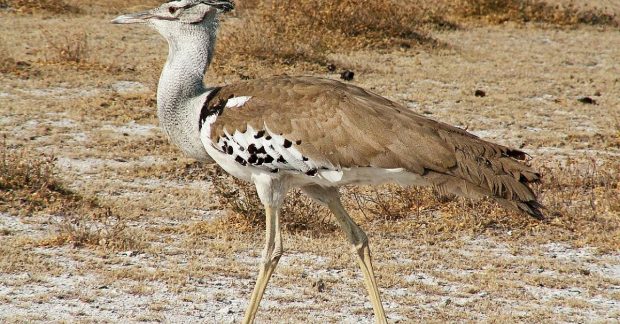
Europe sees record population growth for rare giant birds: over 600 individuals counted in Slovakia
Ornithologists in Slovakia have counted 638 great bustards on a protected natural site, marking the best result in over fifty years.