How much water to drink for healthy blood pressure: cardiologists' advice
Medical experts have shared the recommended daily water intake for men and women to help maintain healthy blood pressure levels.
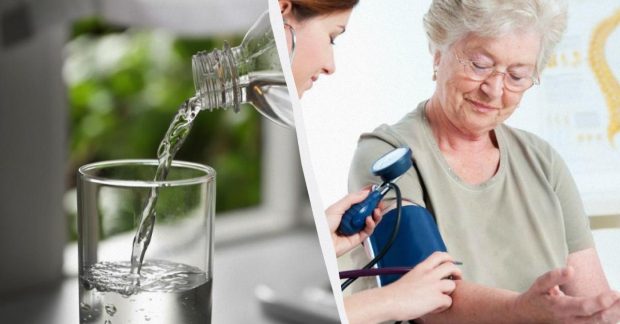 👥Society
Photo: UNIAN
Key points
- Daily water intake: 2.1L for women and 3.1L for men
- Dehydration can both lower and raise blood pressure
- Fluid overload poses risks for people with heart and kidney conditions
Maintaining proper fluid balance is critical for the normal functioning of the cardiovascular system. Inadequate or excessive water intake can trigger both a sharp drop and an increase in blood pressure, directly affecting overall human well-being.
Recommended daily water intake
According to recommendations from medical specialists published in health sources, women should drink about 9 cups (roughly 2.1 liters) of water daily. For men, this figure is higher at approximately 13 cups, equivalent to about 3.1 liters. However, experts emphasize that these volumes are approximate and individual needs may vary based on lifestyle and health status.
Human blood is primarily composed of water, meaning fluid balance changes directly impact blood volume. Vascular surgeon William Schutze explains that when the body is dehydrated, circulating blood volume decreases, which can cause blood pressure to drop and lead to dizziness, particularly when standing up quickly. Conversely, the body may respond by releasing vasopressin, a hormone that constricts blood vessels and raises blood pressure.
Risks of excess fluid and other health factors
Doctors also warn against excessive water consumption. Drinking too much fluid can increase blood volume and elevate blood pressure. As Dr. Ethan Korngold notes, while this is generally not a serious threat for most healthy individuals, fluid overload and sudden pressure spikes can be dangerous for older adults and those with heart failure, liver disease, or kidney problems.
At the same time, physicians remind that adequate hydration is only one component of cardiovascular health. Cardiologist Tisha Saha emphasizes that other lifestyle factors, such as reducing sodium intake, increasing physical activity, and maintaining a healthy weight, often have a much greater impact on blood pressure regulation.
Source UNIAN — unian.ua/health/shcho-bude-yakshcho-piti-duzhe-malo-vodi-kardiologi… ↗
Read next
 🛡️Security
Major fire breaks out at one of Russia's largest oil refineries following drone attack
A fire broke out at the Lukoil-Permnefteorgsintez oil refinery in Perm, Russia, following a nighttime drone strike.
 🩺Health
Energy workers restore power in Rivne region following enemy attack
Following a massive Russian strike on energy infrastructure, specialists have fully restored power to settlements in the Sarny district.
 🇺🇦Ukraine
Estonia addresses incident involving Russian vessel in Gulf of Finland
Estonian officials reaffirmed Ukraine's right to self-defense following the incident with a Russian cargo ship.
 🛡️Security
Rescue operation in Dymer: elderly woman pulled from the rubble
In Dymer, Kyiv region, rescuers pulled an 89-year-old woman from the ruins of a building destroyed by a Russian drone. The death toll from the attack has risen to nine.
 🛡️Security
Russian corvette 'Merkury' damaged in Libya: potential drone attack reported
A Russian warship sustained damage following an explosion in the Libyan port of Benghazi, with reports suggesting a possible strike by naval drones.
 🛡️Security
Russia tests NATO readiness via airspace violations: expert analysis
The Russian Federation is systematically using airspace violations in NATO countries to test air defense response algorithms and the political unity of the Alliance.